Finance
Ray Dalio and Patricia Poppe: Leadership, Careers, and Their Influence on the American Economy

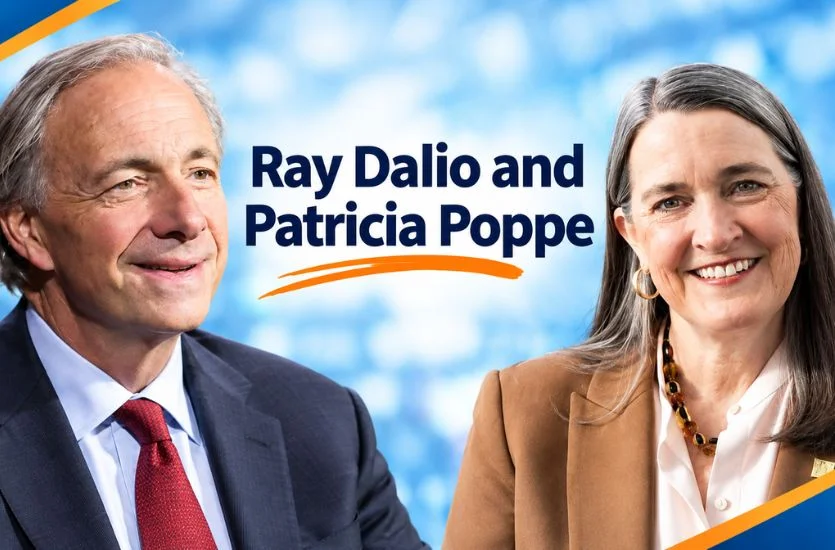
Ray Dalio and Patricia Poppe are two influential figures in American business, but they have built their reputations in very different industries. Ray Dalio is best known as the billionaire investor who founded Bridgewater Associates, one of the world’s most prominent hedge funds. Patricia Poppe, meanwhile, is recognized for her leadership in the American energy sector, particularly as the chief executive officer of PG&E Corporation.
Understanding Ray Dalio and Patricia Poppe offers a useful perspective on how leadership works across different business environments. One built a career studying financial markets, economic cycles, and investment risk. The other developed a reputation for managing large utility operations, improving organizational performance, and addressing complex challenges in energy infrastructure.
Although their professional paths differ, their careers share an important theme: successful leadership requires making difficult decisions under uncertainty while remaining accountable for the consequences.
Their stories also reveal why business success cannot be measured by wealth or executive titles alone. Investment performance, customer trust, employee engagement, public safety, and long-term economic resilience all contribute to a leader’s broader impact.
This article examines their backgrounds, careers, leadership approaches, business challenges, and the lessons that entrepreneurs, investors, professionals, and students can draw from their experiences.
Who Is Ray Dalio? Understanding His Career and Investment Philosophydaisudada
Ray Dalio
Investor, entrepreneur, and author
Ray Dalio founded Bridgewater Associates in 1975. He later became known for global macro investing, economic analysis, and a management philosophy centered on systematic decision-making and candid feedback.
Ray Dalio’s professional journey began long before he became a household name in financial circles. Growing up on Long Island, New York, he developed an early interest in financial markets and began investing as a young person. Over time, that curiosity developed into a career focused on understanding how economies function and why markets behave as they do.
In 1975, Dalio established Bridgewater Associates from his two-bedroom apartment in New York City. What began as a small operation eventually grew into a major institutional investment firm serving sophisticated clients.
His influence extends beyond investment returns. Dalio has spent decades developing frameworks for analyzing economic cycles, managing risk, and making decisions in situations where information is incomplete or contradictory.
How Ray Dalio Built His Reputation in Finance
Dalio’s investment approach is closely associated with global macro investing. Rather than concentrating exclusively on individual companies, this strategy examines the wider economic forces that influence financial assets.
These forces include:
-
Interest rates: How borrowing costs influence economic activity, corporate profits, and asset valuations.
-
Inflation: How changes in purchasing power affect investments and household finances.
-
Debt cycles: How borrowing, lending, and repayment patterns influence economic growth.
-
Currency movements: How exchange rates affect international trade and investment returns.
-
Monetary policy: How central banks influence liquidity, credit, and market expectations.
Dalio’s approach emphasizes understanding the relationships between these variables. An investor who studies only stock prices, for example, may overlook the influence of rising interest rates or a tightening credit environment.
This does not mean that macroeconomic analysis can predict every market movement. It means that investors can make better-informed decisions by studying the forces that shape different economic outcomes.
What Are Ray Dalio’s Principles?
One of Dalio’s most influential contributions is his philosophy of explicit principles: written rules and decision-making frameworks that can be tested, improved, and applied repeatedly.
His book, Principles: Life & Work, explains how he approaches personal development, organizational culture, and problem-solving. His official principles website describes an approach built around confronting reality, learning from mistakes, and remaining open to evidence.
Several ideas stand out.
1. Radical transparency
Dalio advocates open discussion of mistakes, disagreements, and weaknesses. In his view, organizations improve when people can challenge ideas rather than simply agree with senior leaders.
2. Learning from failure
Mistakes become useful when people investigate their causes. Instead of hiding a poor decision, a team can identify what went wrong and develop safeguards against repeating it.
3. Evidence-based decision-making
Dalio encourages people to examine evidence, consider alternative perspectives, and give appropriate weight to the experience of others.
4. Systematic thinking
Complex problems become easier to address when they are broken into smaller questions, evaluated consistently, and reviewed against real outcomes.
These principles can be useful beyond investing. A small business owner can apply them to pricing decisions, hiring, customer complaints, and financial planning.
However, transparency is not automatically beneficial in every form. Organizations still need confidentiality, respectful communication, and appropriate protections for employees. The practical challenge is balancing honest feedback with sound judgment.
Who Is Patricia Poppe? Understanding Her Leadership in Energy
Patricia “Patti” Poppe
Energy executive and corporate leader
Poppe became CEO of PG&E Corporation in January 2021, following leadership positions at CMS Energy and Consumers Energy. Her career includes experience in utilities, power generation, engineering, customer operations, and the automotive industry.
Patricia Poppe, widely known as Patti Poppe, has built her career around operating large, complex organizations. Her work differs significantly from Dalio’s because electric utilities must deliver essential services safely and reliably while navigating extensive regulation, major infrastructure costs, environmental risks, and public expectations.
Before joining PG&E, Poppe served as president and CEO of CMS Energy and its principal subsidiary, Consumers Energy, for five years. Earlier in her career, she held operational and management roles at the same energy group and worked in power plant management at DTE Energy. She also held management positions in the automotive industry at General Motors.
Her academic background includes a bachelor’s degree and a master’s degree in industrial engineering from Purdue University, as well as a master’s degree in management from Stanford Graduate School of Business.
This combination of engineering and management experience is relevant to her leadership style. Energy companies require executives who can understand technical operations while also managing budgets, regulators, employees, customers, and long-term investment decisions.
Why Patricia Poppe’s Role at PG&E Is Important
PG&E provides electricity and natural gas services to millions of people across Northern and Central California. Its operations affect households, businesses, public services, and the broader regional economy.
Leading such a company involves responsibilities that extend well beyond quarterly earnings.
Public safety is particularly important. California’s wildfire exposure creates serious challenges for utility infrastructure, especially where electrical equipment can ignite fires under dangerous conditions. Preventive maintenance, vegetation management, grid monitoring, and infrastructure improvements all contribute to risk reduction.
Reliability is another major concern. Customers expect electricity and gas services to function consistently, and interruptions can affect everything from household routines to hospitals and industrial operations.
Affordability also matters. Utility companies must fund infrastructure maintenance and modernization without placing unreasonable financial pressure on customers.
Finally, public trust is essential. A utility’s relationship with regulators, local governments, communities, and customers can affect its ability to operate effectively.
Poppe’s leadership therefore sits at the intersection of operational performance, public accountability, and financial management.
How Patricia Poppe Approaches Business Transformation
PG&E’s official leadership biography describes Poppe’s use of lean business principles to improve operations, reduce waste, increase efficiency, and strengthen customer experience. The company also identifies safety as a foundation of its operating approach.
Lean management focuses on identifying activities that consume resources without creating sufficient value. In a utility environment, that can involve examining maintenance processes, improving coordination between departments, reducing unnecessary delays, and using performance data to identify recurring problems.
Consider a simplified example. If an electricity repair repeatedly takes longer than necessary because different teams use inconsistent procedures, management can map the process, identify bottlenecks, and establish clearer standards.
The goal is not simply to reduce spending. A well-designed improvement should preserve or strengthen safety, service quality, and reliability.
This distinction is important because cutting costs in an infrastructure business can have unintended consequences if essential maintenance or training is neglected. Effective transformation must measure efficiency alongside operational risk.
Ray Dalio and Patricia Poppe: What Connects Their Leadership Styles?
At first glance, Ray Dalio and Patricia Poppe appear to have little in common. One is associated with hedge funds and global markets, while the other leads a regulated energy utility.
Yet both careers demonstrate the importance of creating systems that allow organizations to make better decisions repeatedly.
Dalio’s investment philosophy emphasizes identifying economic patterns, testing assumptions, and learning from mistakes. Poppe’s operational environment emphasizes measurable performance, standardized processes, risk management, and continuous improvement.
Their common ground becomes clearer when examined through four management principles.
1. Both Emphasize Data and Evidence
Investment managers evaluate economic indicators, asset prices, and risk scenarios. Utility executives examine reliability metrics, safety records, operating costs, customer feedback, and infrastructure performance.
In both cases, evidence helps leaders distinguish between a problem’s symptoms and its underlying causes.
Data alone, however, cannot make a decision. Leaders must determine which measurements matter, recognize the limits of the available information, and decide what action is appropriate.
2. Both Operate in Environments Where Mistakes Are Costly
An incorrect investment decision can cause substantial financial losses. A poor utility operating decision can create financial damage and, in serious cases, threaten public safety.
The consequences differ, but the underlying management lesson is similar: important decisions require disciplined risk assessment.
Leaders should ask what could go wrong, how likely each outcome is, how severe the consequences would be, and which safeguards can reduce the risk.
3. Both Depend on Organizational Culture
Dalio’s published principles place significant emphasis on meaningful work, meaningful relationships, transparency, and continual improvement.
Poppe’s operational agenda at PG&E similarly emphasizes changing how the organization works to improve efficiency and customer trust.
Culture affects whether employees report problems early, challenge flawed assumptions, follow safety procedures, and share information across departments.
A company can have sophisticated technology and detailed policies yet still perform poorly if employees are afraid to raise concerns.
4. Both Must Balance Long-Term Goals With Immediate Pressures
Investors often face pressure to produce short-term returns, even when a longer investment horizon might be more appropriate. Utility executives face pressure to control near-term costs while funding infrastructure that may be needed for decades.
Both situations demand careful prioritization.
The strongest decisions are not necessarily those that produce the fastest visible results. They are those that account for immediate needs without undermining long-term resilience.
Is There a Direct Business Relationship Between Ray Dalio and Patricia Poppe?
This is one of the most important questions behind the combined search term.
A direct personal or professional partnership should not be assumed simply because two prominent business figures appear together online. Their documented careers are separate, and the available evidence does not establish that they are relatives, business partners, or direct collaborators.
There is, however, a more specific institutional connection worth understanding.
In its reported second-quarter 2026 holdings, Bridgewater Associates disclosed a position of approximately 5.93 million shares in PG&E Corporation, valued at about $99.8 million at the end of June 2026. These figures were reported in coverage of the firm’s regulatory filing.
This is relevant because Poppe leads PG&E Corporation, while Dalio founded Bridgewater Associates. But the distinction between the two individuals and their organizations is essential.
-
Ray Dalio: Founded Bridgewater and shaped its investment philosophy, but has transitioned away from its executive leadership.
-
Bridgewater Associates: The institutional investment manager reporting the PG&E position.
-
Patricia Poppe: CEO of PG&E Corporation, the parent company of the utility business.
A Bridgewater investment disclosure does not establish that Dalio personally bought the shares, selected the investment, or instructed the firm to purchase them. Nor does it demonstrate that he and Poppe have met or worked together.
The most defensible conclusion is that their names intersect through an institutional investment connection, not a confirmed personal partnership.
Why This Connection Matters to Investors
The distinction is a useful reminder about how financial information should be interpreted.
Institutional investment filings can reveal what an investment manager reports holding at a particular reporting date. They do not necessarily reveal the manager’s complete investment rationale, its future intentions, or the personal views of its founder.
For anyone researching PG&E Corporation, this information may be one data point among many. It should be considered alongside the company’s earnings, balance sheet, debt obligations, regulatory environment, wildfire exposure, capital spending, and long-term business prospects.
A reported institutional holding is not, by itself, a recommendation to buy a stock.
What Can Business Owners Learn From Ray Dalio and Patricia Poppe?
The most practical way to compare these leaders is to look beyond their job titles and examine the management lessons their careers illustrate.
Lesson 1: Build Repeatable Decision-Making Systems
Dalio’s principles emphasize making decisions through explicit rules rather than relying entirely on intuition. Poppe’s operational focus highlights the importance of consistent processes in organizations responsible for essential services.
Business owners can apply this by documenting how important decisions are made.
For example, a company might establish a standard process for approving large expenses, investigating customer complaints, or assessing new investments. The process should include clear responsibilities, relevant evidence, and a way to review the outcome.
A good system does not eliminate judgment. It helps people use judgment consistently.
Lesson 2: Treat Risk Management as a Daily Responsibility
Risk management is not limited to financial markets or large infrastructure companies. Small businesses face risks involving cash flow, suppliers, customer concentration, cybersecurity, and staffing.
A practical approach includes three steps:
-
Identify the risks that could materially affect the business.
-
Estimate their potential impact and likelihood.
-
Establish preventive measures and contingency plans.
Reviewing these risks regularly is more useful than preparing a plan that sits untouched until something goes wrong.
Lesson 3: Make Honest Feedback Part of the Culture
Dalio’s emphasis on transparency suggests that organizations should create ways to challenge assumptions constructively. In operational businesses, early reporting of errors and safety concerns can prevent larger problems.
Managers can encourage this behavior by asking employees what is not working, responding calmly to bad news, and distinguishing honest mistakes from deliberate misconduct.
The goal is accountability without creating a culture of fear.
Lesson 4: Measure Outcomes That Matter to Customers
Financial performance is important, but it does not capture every aspect of organizational success.
Depending on the industry, meaningful indicators may include:
-
Customer satisfaction and retention.
-
Product or service reliability.
-
Employee safety and retention.
-
Operating efficiency.
-
Cash flow and financial resilience.
-
Progress toward long-term strategic goals.
For a utility, safety and reliability are essential measures. For an investment firm, risk-adjusted returns and portfolio resilience are central. The right performance indicators depend on the organization’s purpose.
Lesson 5: Balance Efficiency With Long-Term Responsibility
A reduction in expenses can look attractive in the short term. Yet cutting essential maintenance, training, or quality control can increase costs later.
Poppe’s utility leadership illustrates the challenge of managing affordability while maintaining safety and infrastructure obligations. Dalio’s risk-focused investment philosophy offers a complementary reminder that short-term gains should be evaluated against longer-term exposure.
For business owners, the lesson is simple: do not measure a decision only by what it saves today; examine what it might cost tomorrow.
What Challenges Shape Their Professional Legacies?
The careers of Ray Dalio and Patricia Poppe are best understood by examining both their achievements and the demands of their respective roles.
Ray Dalio: Investment Success and Organizational Culture
Dalio’s legacy includes building Bridgewater into a globally prominent investment firm and making his decision-making principles widely accessible through books, videos, and other educational resources.
His approach has also attracted debate. Radical transparency and intense feedback can help some teams identify errors, but these practices may be difficult for employees who prefer more conventional management environments.
The wider lesson is that a management philosophy should be assessed not only by its intentions but also by how it works in practice.
Patricia Poppe: Safety, Affordability, and Infrastructure
Poppe’s role at PG&E brings a different set of challenges. California utilities must address wildfire risk, infrastructure reliability, customer affordability, and regulatory oversight simultaneously.
In September 2026, PG&E announced a strategic review of its business and financing arrangements, alongside plans to defer approximately $2 billion of work scheduled for 2027 while maintaining critical safety investments and compliance obligations. The company said the review was intended to support affordable, reliable energy and the investment required to meet future demand.
This illustrates a difficult management trade-off: financing necessary improvements while limiting pressure on customer bills.
The success of such a strategy cannot be judged by announcements alone. It requires evidence over time, including service reliability, safety outcomes, costs, customer experience, and financial performance.
Ultimately, the strongest assessment of either leader comes from examining documented results, acknowledging limitations, and avoiding assumptions that the available evidence does not support.
Frequently Asked Questions About Ray Dalio and Patricia Poppe
1. Who are Ray Dalio and Patricia Poppe?
Ray Dalio is an investor, entrepreneur, and author who founded Bridgewater Associates in 1975. Patricia “Patti” Poppe is an energy executive who became CEO of PG&E Corporation in January 2021. Their careers developed in different industries: investment management and energy infrastructure, respectively.
2. Are Ray Dalio and Patricia Poppe business partners?
There is no established public evidence that they are direct business partners or professional collaborators. The documented institutional connection is that Bridgewater Associates reported holding shares in PG&E Corporation in 2026 while Poppe was leading the company. This does not establish a personal partnership or show that Dalio personally directed the investment.
3. What is Ray Dalio best known for?
Dalio is best known for founding Bridgewater Associates, developing a global macro investment approach, and publishing Principles: Life & Work. His philosophy emphasizes learning from mistakes, examining evidence, managing risk, and developing repeatable decision-making frameworks.
4. What does Patricia Poppe do at PG&E Corporation?
Poppe serves as CEO of PG&E Corporation, the parent company of a major California energy utility. Her responsibilities involve corporate strategy, operational improvement, customer experience, energy affordability, and the company’s broader safety and reliability objectives.
5. What can readers learn from Ray Dalio and Patricia Poppe?
Their careers illustrate the value of evidence-based decisions, structured risk management, continuous improvement, and long-term thinking. Dalio’s investment principles offer lessons in evaluating uncertainty, while Poppe’s utility leadership highlights the importance of operational discipline and public accountability. Neither approach guarantees success, but both provide useful frameworks for evaluating difficult business decisions.
Conclusion: Understanding Ray Dalio and Patricia Poppe
Ray Dalio and Patricia Poppe represent two distinct approaches to leadership in the American business landscape. Dalio built his reputation through investment management, economic analysis, and a philosophy of systematic decision-making. Poppe developed her career through engineering, industrial operations, and executive leadership in the energy sector.
Their professional stories offer valuable lessons about managing risk, building effective teams, and making decisions under pressure. They also demonstrate why leadership must be evaluated in the context of an organization’s responsibilities and the results it delivers.
The documented connection between their names is institutional: Bridgewater Associates reported an investment position in PG&E Corporation in 2026 while Poppe was its CEO. That connection should not be confused with evidence of a personal relationship or direct business partnership.
For readers researching these two figures, the most useful approach is to separate verified facts from speculation, study their respective leadership philosophies, and evaluate their professional records using reliable evidence.
The lasting lesson is that strong leadership depends on more than reputation. It requires disciplined decisions, transparent evaluation of results, and a willingness to learn when reality challenges expectations.



Wakelet: What It Is, How It Works, and How to Use It Effectively

Safra Catz and Diane von Furstenberg: Careers, Leadership, Business Success, and Lasting Influence

Ray Dalio and Patricia Poppe: Leadership, Careers, and Their Influence on the American Economy
-

 Fashion9 years ago
These ’90s fashion trends are making a comeback in 2017
-
Entertainment9 years ago
The final 6 ‘Game of Thrones’ episodes might feel like a full season
-
Fashion9 years ago
According to Dior Couture, this taboo fashion accessory is back
-
Entertainment9 years ago
The old and New Edition cast comes together to perform
-
Sports9 years ago
Phillies’ Aaron Altherr makes mind-boggling barehanded play
-
Business9 years ago
Uber and Lyft are finally available in all of New York State
-
Entertainment9 years ago
Mod turns ‘Counter-Strike’ into a ‘Tekken’ clone with fighting chickens
-
Entertainment9 years ago
Disney’s live-action Aladdin finally finds its stars