
Finance
Melanie CraigScottCapital: Who Is Melanie, What Is Craig Scott Capital, and What Can Be Verified?


The search term Melanie CraigScottCapital has attracted attention from readers looking for information about a person associated online with the financial industry. Some websites describe Melanie as a finance writer, investment analyst, or professional connected with Scott Capital. However, not every claim published online is supported by official documentation.
Understanding Melanie CraigScottCapital requires examining two separate subjects: the online references to Melanie and the documented history of the former brokerage firm Craig Scott Capital, LLC. Separating these topics helps readers avoid confusing search engine visibility with verified professional credentials.
Craig Scott Capital was a real securities brokerage firm based in Uniondale, New York. Official records from the Financial Industry Regulatory Authority (FINRA) and the U.S. Securities and Exchange Commission (SEC) document its registration history and regulatory proceedings.
The available primary records do not establish Melanie’s exact role at that historical firm. This guide explains what can be confirmed, what remains uncertain, and how readers can investigate financial professionals and businesses using reliable sources.
1. Melanie CraigScottCapital: Why Are People Searching for This Name?
People often search for an unfamiliar name after encountering it in a blog post, financial article, social media discussion, or business-related search result. The phrase Melanie CraigScottCapital appears in online articles that attempt to connect a person named Melanie with financial expertise and the Craig Scott Capital name. <Cite refs={[“turn698472search0″,”turn698472search4″,”turn698472search6”]}/>
The search phrase itself does not establish a person’s identity, employment history, or professional qualifications. It may combine a personal name with a company name because readers want to understand whether a connection exists.
There are several possible reasons someone might search this phrase:
- They want to learn about Melanie’s professional background.
- They have encountered a website describing her as a financial professional.
- They want to understand the history of Craig Scott Capital.
- They are checking whether an investment-related claim is legitimate.
- They want to distinguish current online content from historical financial records.
These are reasonable research questions, but they require different types of evidence.
A biography published on a general-interest blog may offer clues about how a name is being presented online. A regulatory record, on the other hand, can establish particular facts about a registered firm or a licensed professional. The two sources should not be treated as equally authoritative.
What does the name Melanie CraigScottCapital establish?
At minimum, the phrase identifies a search topic connecting the name Melanie with CraigScottCapital. It does not, by itself, prove that Melanie was an executive, registered broker, investment adviser, or employee of the historical brokerage.
Some websites make specific claims about her responsibilities, investment philosophy, or professional achievements. Those claims should be independently verified before being repeated as established facts. <Cite refs={[“turn698472search0″,”turn698472search4”]}/>
This distinction is particularly important in financial publishing, where readers may rely on professional credentials when deciding whether to trust advice involving money.
2. What Can Be Verified About Melanie CraigScottCapital?
The most useful way to investigate Melanie CraigScottCapital is to separate online descriptions from independently documented information.
Online articles provide different portrayals of Melanie. Some describe her as a finance writer or editor, while others attribute investment-related responsibilities to her. However, the primary regulatory records reviewed for the historical Craig Scott Capital brokerage do not establish her exact position. <Cite refs={[“turn698472search0″,”turn698472search1″,”turn698472search4”]}/>
That does not prove that no person named Melanie ever worked at the firm. It means the reviewed records are insufficient to confirm the specific professional claims.
Why professional identity needs careful verification
In the financial industry, several job titles can sound similar while representing very different responsibilities.
- Financial writer: Produces articles, explanations, or educational material about financial topics.
- Financial analyst: Examines financial information, businesses, securities, or market conditions.
- Registered representative: Is registered to perform certain securities-related activities through an appropriate firm.
- Investment adviser: Provides investment advice under the applicable regulatory framework.
- Portfolio manager: Makes or oversees investment decisions within a defined mandate.
- Executive: Holds a leadership position within an organization.
A person may have experience in one area without holding the credentials required for another. Writing about investments does not automatically make someone a licensed financial adviser, and an online biography alone cannot establish regulatory status.
When researching Melanie CraigScottCapital, readers should look for a full legal name, documented employment history, relevant credentials, and independent confirmation from reliable sources.
How to evaluate online biographies
A credible professional biography should make its claims possible to check.
Look for details such as:
- The person’s full professional name.
- An identifiable employer and employment dates.
- Relevant qualifications or licenses.
- A verifiable professional profile.
- Official records where the role requires registration.
- Independent sources that support important career claims.
If an article describes major investment achievements but does not identify the relevant companies, dates, transactions, or supporting records, treat those statements as unverified.
The goal is not to assume that a claim is false simply because documentation is difficult to find. It is to avoid presenting uncertainty as fact.
3. What Was Craig Scott Capital, LLC?
Craig Scott Capital, LLC was a historical U.S. broker-dealer. FINRA’s firm record identifies the legal entity, its Central Registration Depository number, its SEC number, and its former Uniondale, New York office. <Cite refs={[“turn507265search16”]}/>
The firm’s documented identifiers are useful because business names can be similar. Checking the exact legal name and registration number helps distinguish a historical regulated entity from a website or business using a comparable name.
Key information recorded in the FINRA firm profile includes:
| Record | Documented information |
|---|---|
| Legal name | Craig Scott Capital, LLC |
| FINRA CRD number | 155924 |
| SEC number | 8-68751 |
| Business structure | Limited liability company |
| State of formation | New York |
| Formation date | October 13, 2010 |
| Former office | Uniondale, New York |
| FINRA registration began | January 20, 2012 |
| Registration ended | September 7, 2017 |
Source: FINRA’s firm profile for Craig Scott Capital, LLC. <Cite refs={[“turn507265search16”]}/>
What does a broker-dealer do?
A broker-dealer is a business involved in securities transactions, either by acting as a broker for customers or by dealing in securities for its own account. The precise activities depend on the firm’s business model and registrations.
Broker-dealers operate within a regulatory framework that includes requirements related to supervision, customer protection, records, and other obligations.
Understanding this distinction matters when investigating Craig Scott Capital because a historical brokerage is not the same thing as a general financial blog. A website discussing investment topics does not automatically inherit the registration status, business history, or regulatory standing of a similarly named brokerage.
Readers should verify the actual legal entity rather than relying on branding alone.
4. What Happened to Craig Scott Capital?
The history of Craig Scott Capital includes both the end of its business operations and subsequent regulatory proceedings. Those events occurred at different times, so they should not be collapsed into a single date.
FINRA’s firm record states that Craig Scott Capital ceased doing business on December 31, 2015. Its registration period later ended on September 7, 2017. <Cite refs={[“turn507265search16”]}/>
The SEC also published an administrative proceeding involving Craig Scott Capital, LLC and two of its principals on April 12, 2016. The SEC’s records describe the findings and sanctions in that proceeding. <Cite refs={[“turn507265search15″,”turn507265search17”]}/>
Understanding the regulatory timeline
| Date | Event |
|---|---|
| October 13, 2010 | Craig Scott Capital, LLC was formed in New York. |
| January 20, 2012 | Its FINRA registration period began. |
| December 31, 2015 | The firm ceased doing business, according to FINRA. |
| April 12, 2016 | The SEC published its administrative order involving the firm and two principals. |
| September 7, 2017 | The firm’s FINRA registration period ended. |
Sources: FINRA firm profile and SEC administrative proceeding. <Cite refs={[“turn507265search16″,”turn507265search15”]}/>
This timeline helps answer a common question: did the firm close in 2015 or end its registration in 2017?
Both dates are relevant, but they describe different events. The end of business operations and the end of a regulatory registration period are not necessarily simultaneous.
What did the SEC proceeding concern?
The SEC’s April 2016 administrative summary states that the proceeding concerned requirements for protecting confidential customer information and maintaining business communications and records.
According to the SEC, the firm used personal email addresses to receive customer-related faxes containing sensitive information. The SEC’s findings also addressed the firm’s recordkeeping practices and the adequacy of its written procedures for protecting customer information.
The SEC reported that the firm agreed to a $100,000 civil money penalty, while Craig S. Taddonio and Brent M. Porges each agreed to pay a $25,000 civil money penalty. The settlement was made without admitting or denying the findings, subject to the terms described in the order. <Cite refs={[“turn507265search15″,”turn507265search17”]}/>
These are documented regulatory matters involving the named respondents. They should not be attributed to Melanie unless independent evidence establishes a relevant connection.
5. Is Melanie CraigScottCapital Connected to the Historical Brokerage?
This is one of the most important questions raised by the search term.
The historical firm is identifiable through FINRA and SEC records. However, the primary firm-level records reviewed do not establish Melanie as a named owner or executive of Craig Scott Capital, nor do they confirm her exact employment position there.
Newer websites describe a person named Melanie in connection with the CraigScottCapital name, but those descriptions are not a substitute for regulatory documentation. <Cite refs={[“turn507265search16″,”turn698472search0″,”turn698472search4”]}/>
It is important to distinguish three separate questions:
Did Craig Scott Capital exist? Yes. Its historical brokerage registration is documented in FINRA records.
Do websites discuss Melanie in connection with CraigScottCapital? Yes. Several online articles make that association. <Cite refs={[“turn698472search0″,”turn698472search4″,”turn698472search6”]}/>
Do the reviewed official records establish Melanie’s exact role at the former brokerage? No. The available records reviewed for this article do not establish that detail.
This is a careful conclusion about the evidence available, not a claim that a person with that name could never have worked for the firm.
Why the distinction matters
An online association can arise through employment, authorship, commentary, historical references, or repeated publication by other websites. Without supporting evidence, it is not possible to determine which explanation applies.
Readers should therefore avoid assuming that Melanie was involved in the SEC proceeding, held a particular securities license, or served as an executive of the historical brokerage.
Claims about individuals should be supported by evidence specific to those individuals, rather than inferred from the history of a company with which their names are associated online.
6. How to Verify a Financial Professional Before Trusting Investment Claims
Anyone researching Melanie CraigScottCapital or another finance-related name can follow a repeatable verification process.
Step 1: Search FINRA BrokerCheck
FINRA BrokerCheck provides information about brokerage firms and registered securities professionals. Search for the person’s full name and compare the results with the stated employer, location, and dates.
Where available, review registration history and disclosure information instead of relying only on a short summary.
Official resource: FINRA BrokerCheck.
Step 2: Check the SEC’s investment adviser database
The SEC’s Investment Adviser Public Disclosure system can help users research investment advisers and advisory firms.
A search should match the person’s full name and business details as closely as possible. A similar name alone is not sufficient evidence of identity.
Official resource: SEC Investment Adviser Public Disclosure.
Step 3: Confirm the legal entity
Check the firm’s exact legal name, registration details, office location, and regulatory identifiers. For Craig Scott Capital, the FINRA CRD number is 155924. <Cite refs={[“turn507265search16”]}/>
This helps avoid confusing an old brokerage with a different company, website, or brand that uses similar wording.
Step 4: Review dates and employment history
Registration records are time-specific. A professional who was registered with a firm in the past should not automatically be described as currently employed there.
Check whether the stated dates overlap and whether the professional’s role is consistent with the available records.
Step 5: Confirm qualifications independently
If a person claims to hold a financial qualification, verify the credential through the organization responsible for issuing it when possible.
A biography, social media account, or email signature can repeat a credential, but independent confirmation provides stronger evidence.
Step 6: Be careful with investment solicitations
Do not send money or sensitive personal information simply because someone uses the name of a historical brokerage or claims to have investment expertise.
Before transferring funds, verify the firm, the individual, the account details, and the nature of the proposed investment through independent channels.
If the information does not match official records, pause and investigate further.
7. What Should Readers Know About Financial Content Websites?
Financial websites can be useful sources of educational material, market commentary, and explanations of investing concepts. However, the existence of an article does not prove that its author is licensed to provide personalized investment advice.
Readers should distinguish among financial education, market analysis, product promotion, and regulated financial services.
A general article might explain how investment fees work or how to interpret a brokerage statement. Personalized recommendations involving securities can raise different regulatory questions, depending on the service, jurisdiction, and circumstances.
Evaluate the quality of financial information
Before relying on a financial article, ask:
- Does it identify the author and relevant qualifications?
- Are factual claims linked to reliable primary sources?
- Does it distinguish evidence from speculation?
- Does it disclose relevant conflicts of interest?
- Does it explain risks as well as potential benefits?
- Is the information current enough for the decision being considered?
A trustworthy article should make it possible to trace important claims back to their sources.
For topics involving Melanie CraigScottCapital, that means separating the verifiable history of Craig Scott Capital from claims about Melanie that remain unconfirmed.
Why independent sources matter
When multiple websites repeat similar wording, it can create the impression that a claim has been independently verified. Yet several articles may be relying on the same original page.
Independent corroboration means finding evidence that does not merely repeat the same unsupported statement.
For example, an official regulatory record, a verified employer biography, and a documented professional profile may provide different kinds of evidence. Their relevance depends on the particular claim being investigated.
This approach is more reliable than counting how many search results mention a name.
8. What Does the Future Hold for Melanie CraigScottCapital?
Predicting someone’s career based on a search phrase or a collection of online biographies would be speculative. The available primary records reviewed here do not establish Melanie’s current employment or future professional plans.
For that reason, it would be inappropriate to claim that she is launching a fund, leading an investment team, managing portfolios, or preparing a new financial venture without supporting documentation.
Readers interested in future developments should look for verifiable announcements, current professional records, or credible reporting that identifies the relevant individual and organization.
The same principle applies to any company using the CraigScottCapital name. A current website should be evaluated based on its actual legal identity, services, ownership, and regulatory status, not merely on a connection to a historical business name.
For financial research, verified current information is more valuable than confident predictions.
Frequently Asked Questions
1. Who is Melanie CraigScottCapital?
Melanie CraigScottCapital is a search phrase used in online articles connecting a person named Melanie with the CraigScottCapital name. Some websites describe Melanie as a finance writer, analyst, or investment professional, but the primary regulatory records reviewed for the historical brokerage do not establish her exact role. <Cite refs={[“turn698472search0″,”turn698472search4″,”turn507265search16”]}/>
2. Was Melanie CraigScottCapital an employee of Craig Scott Capital?
The reviewed primary records do not confirm Melanie’s employment or exact position at the historical firm. This does not prove that no person named Melanie ever worked there; it means that the specific connection has not been established by the evidence reviewed for this article.
3. What was Craig Scott Capital, LLC?
Craig Scott Capital, LLC was a historical U.S. broker-dealer with FINRA CRD number 155924. FINRA records identify its New York formation date as October 13, 2010, and its registration period as January 20, 2012, through September 7, 2017. <Cite refs={[“turn507265search16”]}/>
4. Why did Craig Scott Capital attract regulatory attention?
The SEC published an administrative proceeding involving Craig Scott Capital, LLC and two principals on April 12, 2016. The proceeding concerned the protection of confidential customer information and the maintenance of business communications and records. The SEC’s order describes the findings and agreed penalties. <Cite refs={[“turn507265search15″,”turn507265search17”]}/>
5. How can I verify whether a financial professional is legitimate?
Start with FINRA BrokerCheck for brokerage firms and registered securities professionals, and the SEC’s adviser database when investment-adviser status is relevant. Match the person’s full name, employer, registration history, and credentials. Do not rely solely on a website biography or a similar company name.
Conclusion: Separate Verified Facts From Online Claims
The keyword Melanie CraigScottCapital combines an online identity question with the documented history of a former financial brokerage. Understanding the difference is essential for producing accurate financial content and helping readers make informed decisions.
Official records establish that Craig Scott Capital, LLC was a real broker-dealer, that it ceased doing business in December 2015, and that its FINRA registration ended in September 2017. The SEC also documented a 2016 proceeding concerning the firm’s customer-information protection and recordkeeping practices.
By contrast, the primary records reviewed here do not establish Melanie’s exact professional role or confirm that she was a named executive of the historical firm. Online descriptions should therefore be treated as claims requiring further verification, not as established facts.
For readers, the most useful next step is to check the original records, confirm professional credentials, and avoid making assumptions from search results alone. For publishers, the same approach supports accurate, transparent, and trustworthy financial reporting.
No article can guarantee a permanent search ranking. The strongest long-term approach is to publish genuinely useful information, cite authoritative sources, distinguish facts from uncertainty, and update the content when reliable new evidence becomes available.
Finance
Ray Dalio and Patricia Poppe: Leadership, Careers, and Their Influence on the American Economy
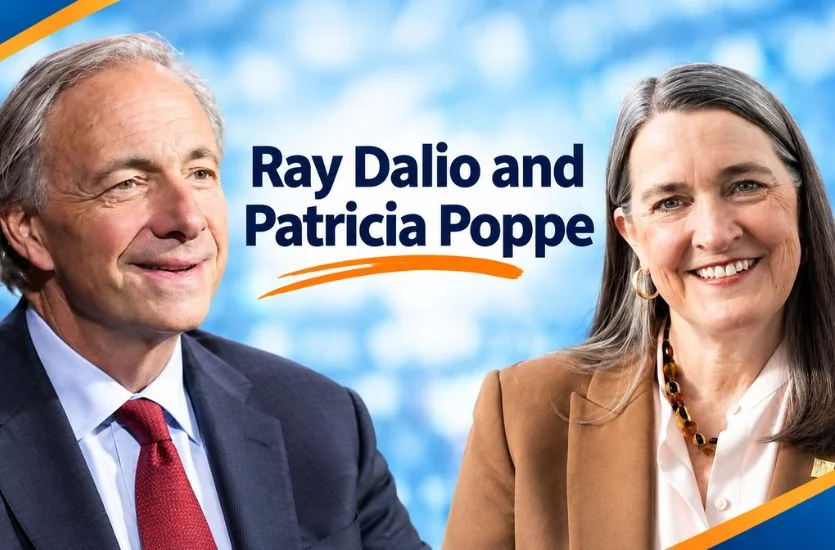
Ray Dalio and Patricia Poppe are two influential figures in American business, but they have built their reputations in very different industries. Ray Dalio is best known as the billionaire investor who founded Bridgewater Associates, one of the world’s most prominent hedge funds. Patricia Poppe, meanwhile, is recognized for her leadership in the American energy sector, particularly as the chief executive officer of PG&E Corporation.
Understanding Ray Dalio and Patricia Poppe offers a useful perspective on how leadership works across different business environments. One built a career studying financial markets, economic cycles, and investment risk. The other developed a reputation for managing large utility operations, improving organizational performance, and addressing complex challenges in energy infrastructure.
Although their professional paths differ, their careers share an important theme: successful leadership requires making difficult decisions under uncertainty while remaining accountable for the consequences.
Their stories also reveal why business success cannot be measured by wealth or executive titles alone. Investment performance, customer trust, employee engagement, public safety, and long-term economic resilience all contribute to a leader’s broader impact.
This article examines their backgrounds, careers, leadership approaches, business challenges, and the lessons that entrepreneurs, investors, professionals, and students can draw from their experiences.
Who Is Ray Dalio? Understanding His Career and Investment Philosophydaisudada
Ray Dalio
Investor, entrepreneur, and author
Ray Dalio founded Bridgewater Associates in 1975. He later became known for global macro investing, economic analysis, and a management philosophy centered on systematic decision-making and candid feedback.
Ray Dalio’s professional journey began long before he became a household name in financial circles. Growing up on Long Island, New York, he developed an early interest in financial markets and began investing as a young person. Over time, that curiosity developed into a career focused on understanding how economies function and why markets behave as they do.
In 1975, Dalio established Bridgewater Associates from his two-bedroom apartment in New York City. What began as a small operation eventually grew into a major institutional investment firm serving sophisticated clients.
His influence extends beyond investment returns. Dalio has spent decades developing frameworks for analyzing economic cycles, managing risk, and making decisions in situations where information is incomplete or contradictory.
How Ray Dalio Built His Reputation in Finance
Dalio’s investment approach is closely associated with global macro investing. Rather than concentrating exclusively on individual companies, this strategy examines the wider economic forces that influence financial assets.
These forces include:
-
Interest rates: How borrowing costs influence economic activity, corporate profits, and asset valuations.
-
Inflation: How changes in purchasing power affect investments and household finances.
-
Debt cycles: How borrowing, lending, and repayment patterns influence economic growth.
-
Currency movements: How exchange rates affect international trade and investment returns.
-
Monetary policy: How central banks influence liquidity, credit, and market expectations.
Dalio’s approach emphasizes understanding the relationships between these variables. An investor who studies only stock prices, for example, may overlook the influence of rising interest rates or a tightening credit environment.
This does not mean that macroeconomic analysis can predict every market movement. It means that investors can make better-informed decisions by studying the forces that shape different economic outcomes.
What Are Ray Dalio’s Principles?
One of Dalio’s most influential contributions is his philosophy of explicit principles: written rules and decision-making frameworks that can be tested, improved, and applied repeatedly.
His book, Principles: Life & Work, explains how he approaches personal development, organizational culture, and problem-solving. His official principles website describes an approach built around confronting reality, learning from mistakes, and remaining open to evidence.
Several ideas stand out.
1. Radical transparency
Dalio advocates open discussion of mistakes, disagreements, and weaknesses. In his view, organizations improve when people can challenge ideas rather than simply agree with senior leaders.
2. Learning from failure
Mistakes become useful when people investigate their causes. Instead of hiding a poor decision, a team can identify what went wrong and develop safeguards against repeating it.
3. Evidence-based decision-making
Dalio encourages people to examine evidence, consider alternative perspectives, and give appropriate weight to the experience of others.
4. Systematic thinking
Complex problems become easier to address when they are broken into smaller questions, evaluated consistently, and reviewed against real outcomes.
These principles can be useful beyond investing. A small business owner can apply them to pricing decisions, hiring, customer complaints, and financial planning.
However, transparency is not automatically beneficial in every form. Organizations still need confidentiality, respectful communication, and appropriate protections for employees. The practical challenge is balancing honest feedback with sound judgment.
Who Is Patricia Poppe? Understanding Her Leadership in Energy
Patricia “Patti” Poppe
Energy executive and corporate leader
Poppe became CEO of PG&E Corporation in January 2021, following leadership positions at CMS Energy and Consumers Energy. Her career includes experience in utilities, power generation, engineering, customer operations, and the automotive industry.
Patricia Poppe, widely known as Patti Poppe, has built her career around operating large, complex organizations. Her work differs significantly from Dalio’s because electric utilities must deliver essential services safely and reliably while navigating extensive regulation, major infrastructure costs, environmental risks, and public expectations.
Before joining PG&E, Poppe served as president and CEO of CMS Energy and its principal subsidiary, Consumers Energy, for five years. Earlier in her career, she held operational and management roles at the same energy group and worked in power plant management at DTE Energy. She also held management positions in the automotive industry at General Motors.
Her academic background includes a bachelor’s degree and a master’s degree in industrial engineering from Purdue University, as well as a master’s degree in management from Stanford Graduate School of Business.
This combination of engineering and management experience is relevant to her leadership style. Energy companies require executives who can understand technical operations while also managing budgets, regulators, employees, customers, and long-term investment decisions.
Why Patricia Poppe’s Role at PG&E Is Important
PG&E provides electricity and natural gas services to millions of people across Northern and Central California. Its operations affect households, businesses, public services, and the broader regional economy.
Leading such a company involves responsibilities that extend well beyond quarterly earnings.
Public safety is particularly important. California’s wildfire exposure creates serious challenges for utility infrastructure, especially where electrical equipment can ignite fires under dangerous conditions. Preventive maintenance, vegetation management, grid monitoring, and infrastructure improvements all contribute to risk reduction.
Reliability is another major concern. Customers expect electricity and gas services to function consistently, and interruptions can affect everything from household routines to hospitals and industrial operations.
Affordability also matters. Utility companies must fund infrastructure maintenance and modernization without placing unreasonable financial pressure on customers.
Finally, public trust is essential. A utility’s relationship with regulators, local governments, communities, and customers can affect its ability to operate effectively.
Poppe’s leadership therefore sits at the intersection of operational performance, public accountability, and financial management.
How Patricia Poppe Approaches Business Transformation
PG&E’s official leadership biography describes Poppe’s use of lean business principles to improve operations, reduce waste, increase efficiency, and strengthen customer experience. The company also identifies safety as a foundation of its operating approach.
Lean management focuses on identifying activities that consume resources without creating sufficient value. In a utility environment, that can involve examining maintenance processes, improving coordination between departments, reducing unnecessary delays, and using performance data to identify recurring problems.
Consider a simplified example. If an electricity repair repeatedly takes longer than necessary because different teams use inconsistent procedures, management can map the process, identify bottlenecks, and establish clearer standards.
The goal is not simply to reduce spending. A well-designed improvement should preserve or strengthen safety, service quality, and reliability.
This distinction is important because cutting costs in an infrastructure business can have unintended consequences if essential maintenance or training is neglected. Effective transformation must measure efficiency alongside operational risk.
Ray Dalio and Patricia Poppe: What Connects Their Leadership Styles?
At first glance, Ray Dalio and Patricia Poppe appear to have little in common. One is associated with hedge funds and global markets, while the other leads a regulated energy utility.
Yet both careers demonstrate the importance of creating systems that allow organizations to make better decisions repeatedly.
Dalio’s investment philosophy emphasizes identifying economic patterns, testing assumptions, and learning from mistakes. Poppe’s operational environment emphasizes measurable performance, standardized processes, risk management, and continuous improvement.
Their common ground becomes clearer when examined through four management principles.
1. Both Emphasize Data and Evidence
Investment managers evaluate economic indicators, asset prices, and risk scenarios. Utility executives examine reliability metrics, safety records, operating costs, customer feedback, and infrastructure performance.
In both cases, evidence helps leaders distinguish between a problem’s symptoms and its underlying causes.
Data alone, however, cannot make a decision. Leaders must determine which measurements matter, recognize the limits of the available information, and decide what action is appropriate.
2. Both Operate in Environments Where Mistakes Are Costly
An incorrect investment decision can cause substantial financial losses. A poor utility operating decision can create financial damage and, in serious cases, threaten public safety.
The consequences differ, but the underlying management lesson is similar: important decisions require disciplined risk assessment.
Leaders should ask what could go wrong, how likely each outcome is, how severe the consequences would be, and which safeguards can reduce the risk.
3. Both Depend on Organizational Culture
Dalio’s published principles place significant emphasis on meaningful work, meaningful relationships, transparency, and continual improvement.
Poppe’s operational agenda at PG&E similarly emphasizes changing how the organization works to improve efficiency and customer trust.
Culture affects whether employees report problems early, challenge flawed assumptions, follow safety procedures, and share information across departments.
A company can have sophisticated technology and detailed policies yet still perform poorly if employees are afraid to raise concerns.
4. Both Must Balance Long-Term Goals With Immediate Pressures
Investors often face pressure to produce short-term returns, even when a longer investment horizon might be more appropriate. Utility executives face pressure to control near-term costs while funding infrastructure that may be needed for decades.
Both situations demand careful prioritization.
The strongest decisions are not necessarily those that produce the fastest visible results. They are those that account for immediate needs without undermining long-term resilience.
Is There a Direct Business Relationship Between Ray Dalio and Patricia Poppe?
This is one of the most important questions behind the combined search term.
A direct personal or professional partnership should not be assumed simply because two prominent business figures appear together online. Their documented careers are separate, and the available evidence does not establish that they are relatives, business partners, or direct collaborators.
There is, however, a more specific institutional connection worth understanding.
In its reported second-quarter 2026 holdings, Bridgewater Associates disclosed a position of approximately 5.93 million shares in PG&E Corporation, valued at about $99.8 million at the end of June 2026. These figures were reported in coverage of the firm’s regulatory filing.
This is relevant because Poppe leads PG&E Corporation, while Dalio founded Bridgewater Associates. But the distinction between the two individuals and their organizations is essential.
-
Ray Dalio: Founded Bridgewater and shaped its investment philosophy, but has transitioned away from its executive leadership.
-
Bridgewater Associates: The institutional investment manager reporting the PG&E position.
-
Patricia Poppe: CEO of PG&E Corporation, the parent company of the utility business.
A Bridgewater investment disclosure does not establish that Dalio personally bought the shares, selected the investment, or instructed the firm to purchase them. Nor does it demonstrate that he and Poppe have met or worked together.
The most defensible conclusion is that their names intersect through an institutional investment connection, not a confirmed personal partnership.
Why This Connection Matters to Investors
The distinction is a useful reminder about how financial information should be interpreted.
Institutional investment filings can reveal what an investment manager reports holding at a particular reporting date. They do not necessarily reveal the manager’s complete investment rationale, its future intentions, or the personal views of its founder.
For anyone researching PG&E Corporation, this information may be one data point among many. It should be considered alongside the company’s earnings, balance sheet, debt obligations, regulatory environment, wildfire exposure, capital spending, and long-term business prospects.
A reported institutional holding is not, by itself, a recommendation to buy a stock.
What Can Business Owners Learn From Ray Dalio and Patricia Poppe?
The most practical way to compare these leaders is to look beyond their job titles and examine the management lessons their careers illustrate.
Lesson 1: Build Repeatable Decision-Making Systems
Dalio’s principles emphasize making decisions through explicit rules rather than relying entirely on intuition. Poppe’s operational focus highlights the importance of consistent processes in organizations responsible for essential services.
Business owners can apply this by documenting how important decisions are made.
For example, a company might establish a standard process for approving large expenses, investigating customer complaints, or assessing new investments. The process should include clear responsibilities, relevant evidence, and a way to review the outcome.
A good system does not eliminate judgment. It helps people use judgment consistently.
Lesson 2: Treat Risk Management as a Daily Responsibility
Risk management is not limited to financial markets or large infrastructure companies. Small businesses face risks involving cash flow, suppliers, customer concentration, cybersecurity, and staffing.
A practical approach includes three steps:
-
Identify the risks that could materially affect the business.
-
Estimate their potential impact and likelihood.
-
Establish preventive measures and contingency plans.
Reviewing these risks regularly is more useful than preparing a plan that sits untouched until something goes wrong.
Lesson 3: Make Honest Feedback Part of the Culture
Dalio’s emphasis on transparency suggests that organizations should create ways to challenge assumptions constructively. In operational businesses, early reporting of errors and safety concerns can prevent larger problems.
Managers can encourage this behavior by asking employees what is not working, responding calmly to bad news, and distinguishing honest mistakes from deliberate misconduct.
The goal is accountability without creating a culture of fear.
Lesson 4: Measure Outcomes That Matter to Customers
Financial performance is important, but it does not capture every aspect of organizational success.
Depending on the industry, meaningful indicators may include:
-
Customer satisfaction and retention.
-
Product or service reliability.
-
Employee safety and retention.
-
Operating efficiency.
-
Cash flow and financial resilience.
-
Progress toward long-term strategic goals.
For a utility, safety and reliability are essential measures. For an investment firm, risk-adjusted returns and portfolio resilience are central. The right performance indicators depend on the organization’s purpose.
Lesson 5: Balance Efficiency With Long-Term Responsibility
A reduction in expenses can look attractive in the short term. Yet cutting essential maintenance, training, or quality control can increase costs later.
Poppe’s utility leadership illustrates the challenge of managing affordability while maintaining safety and infrastructure obligations. Dalio’s risk-focused investment philosophy offers a complementary reminder that short-term gains should be evaluated against longer-term exposure.
For business owners, the lesson is simple: do not measure a decision only by what it saves today; examine what it might cost tomorrow.
What Challenges Shape Their Professional Legacies?
The careers of Ray Dalio and Patricia Poppe are best understood by examining both their achievements and the demands of their respective roles.
Ray Dalio: Investment Success and Organizational Culture
Dalio’s legacy includes building Bridgewater into a globally prominent investment firm and making his decision-making principles widely accessible through books, videos, and other educational resources.
His approach has also attracted debate. Radical transparency and intense feedback can help some teams identify errors, but these practices may be difficult for employees who prefer more conventional management environments.
The wider lesson is that a management philosophy should be assessed not only by its intentions but also by how it works in practice.
Patricia Poppe: Safety, Affordability, and Infrastructure
Poppe’s role at PG&E brings a different set of challenges. California utilities must address wildfire risk, infrastructure reliability, customer affordability, and regulatory oversight simultaneously.
In September 2026, PG&E announced a strategic review of its business and financing arrangements, alongside plans to defer approximately $2 billion of work scheduled for 2027 while maintaining critical safety investments and compliance obligations. The company said the review was intended to support affordable, reliable energy and the investment required to meet future demand.
This illustrates a difficult management trade-off: financing necessary improvements while limiting pressure on customer bills.
The success of such a strategy cannot be judged by announcements alone. It requires evidence over time, including service reliability, safety outcomes, costs, customer experience, and financial performance.
Ultimately, the strongest assessment of either leader comes from examining documented results, acknowledging limitations, and avoiding assumptions that the available evidence does not support.
Frequently Asked Questions About Ray Dalio and Patricia Poppe
1. Who are Ray Dalio and Patricia Poppe?
Ray Dalio is an investor, entrepreneur, and author who founded Bridgewater Associates in 1975. Patricia “Patti” Poppe is an energy executive who became CEO of PG&E Corporation in January 2021. Their careers developed in different industries: investment management and energy infrastructure, respectively.
2. Are Ray Dalio and Patricia Poppe business partners?
There is no established public evidence that they are direct business partners or professional collaborators. The documented institutional connection is that Bridgewater Associates reported holding shares in PG&E Corporation in 2026 while Poppe was leading the company. This does not establish a personal partnership or show that Dalio personally directed the investment.
3. What is Ray Dalio best known for?
Dalio is best known for founding Bridgewater Associates, developing a global macro investment approach, and publishing Principles: Life & Work. His philosophy emphasizes learning from mistakes, examining evidence, managing risk, and developing repeatable decision-making frameworks.
4. What does Patricia Poppe do at PG&E Corporation?
Poppe serves as CEO of PG&E Corporation, the parent company of a major California energy utility. Her responsibilities involve corporate strategy, operational improvement, customer experience, energy affordability, and the company’s broader safety and reliability objectives.
5. What can readers learn from Ray Dalio and Patricia Poppe?
Their careers illustrate the value of evidence-based decisions, structured risk management, continuous improvement, and long-term thinking. Dalio’s investment principles offer lessons in evaluating uncertainty, while Poppe’s utility leadership highlights the importance of operational discipline and public accountability. Neither approach guarantees success, but both provide useful frameworks for evaluating difficult business decisions.
Conclusion: Understanding Ray Dalio and Patricia Poppe
Ray Dalio and Patricia Poppe represent two distinct approaches to leadership in the American business landscape. Dalio built his reputation through investment management, economic analysis, and a philosophy of systematic decision-making. Poppe developed her career through engineering, industrial operations, and executive leadership in the energy sector.
Their professional stories offer valuable lessons about managing risk, building effective teams, and making decisions under pressure. They also demonstrate why leadership must be evaluated in the context of an organization’s responsibilities and the results it delivers.
The documented connection between their names is institutional: Bridgewater Associates reported an investment position in PG&E Corporation in 2026 while Poppe was its CEO. That connection should not be confused with evidence of a personal relationship or direct business partnership.
For readers researching these two figures, the most useful approach is to separate verified facts from speculation, study their respective leadership philosophies, and evaluate their professional records using reliable evidence.
The lasting lesson is that strong leadership depends on more than reputation. It requires disciplined decisions, transparent evaluation of results, and a willingness to learn when reality challenges expectations.


Melanie CraigScottCapital: Who Is Melanie, What Is Craig Scott Capital, and What Can Be Verified?

DigitalRGS Everything Apple: Your Complete Guide to Apple Devices, Features, and Technology

Fawn Weaver Net Worth in 2026: Her Whiskey Empire, Career, and Financial Challenges
-

 Fashion9 years ago
These ’90s fashion trends are making a comeback in 2017
-
Entertainment9 years ago
The final 6 ‘Game of Thrones’ episodes might feel like a full season
-
Fashion9 years ago
According to Dior Couture, this taboo fashion accessory is back
-
Entertainment9 years ago
The old and New Edition cast comes together to perform
-
Sports9 years ago
Phillies’ Aaron Altherr makes mind-boggling barehanded play
-
Business9 years ago
Uber and Lyft are finally available in all of New York State
-
Entertainment9 years ago
Mod turns ‘Counter-Strike’ into a ‘Tekken’ clone with fighting chickens
-
Entertainment9 years ago
Disney’s live-action Aladdin finally finds its stars