Health
Can Anyone Do a Bro Split? Who It Works For, Who Should Skip It, and How to Make It Effective

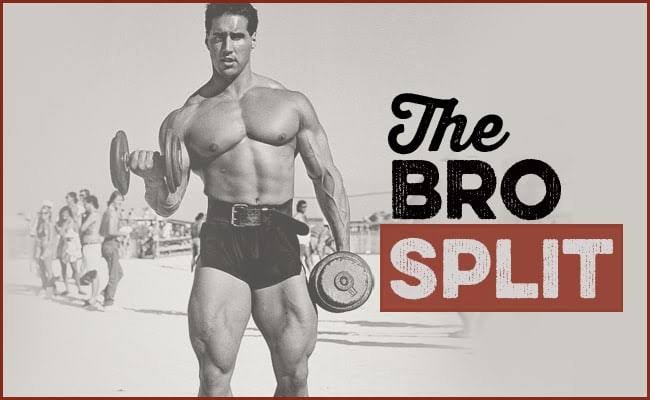
If you have ever looked at a classic bodybuilding schedule and wondered, can anyone do a bro split, the short answer is yes. But “can” and “should” are not the same thing.
A bro split usually gives one major body part its own training day. Chest on Monday. Back on Tuesday. Shoulders on Wednesday. Legs on Thursday. Arms on Friday. It is simple, focused, and still popular because many lifters genuinely enjoy training that way.
The better question is whether the split matches your goals, schedule, recovery, and training experience. Current resistance-training guidance does not identify one perfect weekly split. The American College of Sports Medicine’s 2026 position stand emphasizes consistent progressive resistance training, sufficient weekly volume, and individualization. ch2turn816457search3
So, can anyone do a bro split successfully? For most healthy adults who can safely resistance train, yes. Whether it is the most efficient option depends on the person.
What Is a Bro Split and Why Do People Use It?
A traditional bro split separates the body into training days such as:
- Monday: Chest
- Tuesday: Back
- Wednesday: Shoulders
- Thursday: Legs
- Friday: Arms
- Weekend: Rest or light activity
Some versions combine chest with triceps, back with biceps, or shoulders with arms. The main idea stays the same: a muscle receives a large amount of focused work in one session, then several days pass before it is trained directly again.
When people search can anyone do a bro split, they often assume it is reserved for advanced bodybuilders. It is not. Beginners, women, natural lifters, recreational gym-goers, and older adults can all use body-part splits. The challenge is programming the workload properly.
The split itself is simply an organizational tool. Results come from what you do inside that structure.
Can Anyone Do a Bro Split Safely?
For a generally healthy person, can anyone do a bro split is mainly a question of exercise selection, training dose, technique, and recovery.
The World Health Organization recommends that adults perform muscle-strengthening activity involving major muscle groups on at least two days per week. That is a health guideline rather than a bodybuilding prescription, but it reminds us that a weekly routine should train the whole body rather than repeatedly favoring only a few “mirror muscles.” lit is more likely to suit you if you:
- Can train four or five days most weeks.
- Enjoy longer, body-part-focused workouts.
- Want to prioritize muscle size and physique development.
- Recover well between sessions.
- Know basic lifting technique.
- Can control volume instead of adding endless exercises.
Extra care is sensible if you have an injury, persistent joint pain, a medical condition affecting exercise tolerance, or another circumstance that changes what exercise is appropriate. In those cases, individualized professional guidance matters more than the name of the split.
Can Anyone Do a Bro Split as a Beginner?
Technically, yes. Practically, a beginner often has easier options.
If you are new to lifting and asking can anyone do a bro split, remember that beginners usually do not need huge amounts of exercise to improve. They need good technique, repeated practice, manageable fatigue, and progressive overload.
A full-body routine performed two or three times per week gives a beginner more opportunities to practice squats, presses, rows, hinges, pulldowns, and other foundational patterns. An upper/lower split can also provide frequent practice without requiring daily gym visits.
A classic bro split may train a movement only once every seven days. If your bench press technique is still inconsistent, one weekly exposure gives you fewer chances to improve the skill.
Still, adherence matters. If can anyone do a bro split is really your way of asking whether a beginner is “allowed” to enjoy bodybuilding-style training, the answer is absolutely yes. Just keep the exercise menu and weekly volume sensible.
Can Anyone Do a Bro Split for Muscle Growth?
Yes. A bro split can build muscle.
Research on resistance-training frequency suggests that when weekly training volume is equated, frequency itself may not meaningfully change hypertrophy in many circumstances. One systematic review and meta-analysis concluded that people can often choose frequency based on preference when total volume is matched. es an important answer to can anyone do a bro split for hypertrophy: once-weekly direct training is not automatically ineffective.
However, frequency can help distribute volume. Ten hard sets for chest in one session may feel very different from five sets on Monday and five on Thursday. Later sets in a long workout may suffer because fatigue reduces load, repetitions, concentration, or technique.
ACSM’s 2026 position stand reports that muscle hypertrophy is enhanced by higher weekly training volume, highlighting roughly 10 or more sets per muscle group per week in the reviewed evidence. ractical lesson is not “bro splits are bad.” It is this: frequency is a way to organize productive weekly volume.
Why Can Anyone Do a Bro Split and Still Make Progress?
The phrase can anyone do a bro split often appears in debates that make training sound more complicated than it needs to be. Bro splits continue to work for many people because they have several real-world advantages.
Each Workout Has One Clear Purpose
There is very little planning friction. On back day, you train your back. On leg day, you train your legs. That simplicity can improve consistency.
You are not mentally juggling six different body parts or constantly checking what exercise comes next.
You Can Focus Deeply on One Muscle Group
A physique-focused lifter may enjoy starting with a demanding compound movement and then using machines, cables, or isolation work to train the same area through different movement patterns.
That makes it easier to specialize in a body part you particularly want to develop.
Sessions Can Feel Rewarding
A pump does not guarantee growth, but enjoyment matters.
If you genuinely enjoy walking out of the gym after a focused chest, back, or arm workout, that positive experience can make long-term adherence much easier.
Local Recovery Time Is Generous
A muscle trained directly once per week normally has plenty of time before its next dedicated session.
Overlap still matters, though. Chest work trains triceps and front delts, while back work involves the biceps.
This is another reason can anyone do a bro split cannot be answered by looking only at the calendar. You must look at total muscular stress.
Where a Traditional Bro Split Can Fall Short
A bro split has strengths, but it also has predictable weaknesses.
Missing One Workout Hurts More
Miss one full-body session and the same muscles may be trained again within a few days.
Miss your only chest session and you may go close to two weeks without direct chest work.
For people with unpredictable work schedules, travel, family commitments, or frequent interruptions, this can become frustrating.
Single-Session Volume Can Become Excessive
The first few hard sets are performed while you are fresh. After many exercises, performance often drops.
A four-exercise chest workout can be productive. A marathon of presses and fly variations may simply create more fatigue.
More work is not automatically more growth.
Strength Practice May Be Too Infrequent
Strength is partly a skill.
If your main goal is to maximize a specific squat, bench press, or deadlift, practicing that movement or closely related patterns more often can be useful.
A bodybuilder trying to grow their chest and a powerlifter trying to maximize their bench press may therefore need very different schedules.
Muscle Overlap Can Sabotage Recovery
Chest day hits triceps. Shoulder day may hit triceps again. Back day trains biceps.
If the week is poorly ordered, your dedicated arm session can arrive when your arms are already tired.
That is why can anyone do a bro split deserves a personalized answer, not a copied five-day template.
Who Is a Bro Split Best For?
A bro split tends to work best for lifters who enjoy bodybuilding-style training and can reliably maintain a higher weekly gym frequency.
You are a strong candidate if:
- You can train four to six days per week. Consistency makes the structure much easier to maintain.
- Your main goal is hypertrophy or physique development. Body-part specialization naturally fits muscle-building goals.
- You enjoy concentrated body-part sessions. Some lifters simply perform better when they can focus completely on one area.
- Your basic exercise technique is already solid. You do not require extremely frequent practice simply to learn the lifts.
- You recover well from moderate-to-high training volume. Sleep, food intake, stress, and training history all influence this.
- You track performance and adjust workload when needed. Experienced lifters recognize when adding another exercise is useful and when it is just creating fatigue.
If those points describe you, can anyone do a bro split becomes a less important question than “How should I build mine?”
Who Should Choose Another Training Split?
If you only have two or three reliable gym days, a traditional five-day bro split is usually inefficient.
Full-body or upper/lower programming can expose each major muscle to training more consistently.
Consider another split if you:
- Frequently miss scheduled gym days.
- Want shorter workouts.
- Prioritize strength in specific compound lifts.
- Prefer training each muscle more than once per week.
- Struggle with soreness after very high-volume sessions.
- Travel often or have an unpredictable schedule.
- Lose performance badly after many sets for one body part.
For these lifters, can anyone do a bro split is technically still yes, but the split may create more scheduling problems than it solves.
There is no prize for forcing yourself into a five-day bodybuilding routine when a three-day plan fits your life dramatically better.
A Smarter Bro Split for Most Lifters
You do not have to choose between a pure bro split and a completely different routine.
A hybrid can preserve focused training while adding a second, smaller exposure for key muscles.
Try this structure:
- Monday – Chest + light triceps
- Tuesday – Back + light biceps
- Wednesday – Legs
- Thursday – Shoulders + chest accessory
- Friday – Arms + back accessory
- Weekend – Rest, walking, mobility, or easy cardio
This approach gives chest and back one main session plus one smaller touchpoint.
It also acknowledges that muscles do not exist in isolation. Pressing trains more than the chest. Pulling trains more than the back.
For someone asking can anyone do a bro split but worrying about once-weekly frequency, this is often a practical middle ground.
You keep the fun of body-part specialization without being locked into an extremely rigid once-per-week setup.
How Many Sets Should You Do on a Bro Split?
There is no universal number because training age, exercise selection, recovery capacity, effort, and genetics all influence how much work you can use productively.
For hypertrophy, focus on quality weekly sets rather than cramming as much work as possible into a single day. ACSM’s 2026 review highlights higher weekly volume, around 10 sets or more per muscle group, as favorable for hypertrophy. able starting framework is:
- Large muscle groups: roughly 8–12 challenging weekly sets.
- Small muscle groups: often fewer direct sets because compound lifts already train them.
- Rep ranges: use moderate and higher repetitions according to the exercise and your goals.
- Effort: train hard while preserving sound technique.
- Progression: gradually add repetitions, load, productive sets, or better execution.
Do not treat those numbers as laws.
Someone may grow extremely well from eight quality sets, while another experienced lifter may benefit from more.
If can anyone do a bro split has one universal answer, it is that the program must eventually be adjusted to the individual response.
How to Know If Your Bro Split Is Working
Stop judging the routine by how sore you feel.
Soreness can occur after a productive workout, but being unable to walk comfortably after every leg day is not a sophisticated measurement of muscle growth.
Look for measurable progress instead.
Your bro split is probably working if:
- Loads or repetitions gradually increase.
- Target muscles grow over time.
- You recover before the next hard session.
- Joint discomfort stays low.
- Motivation remains stable.
- You can complete the plan consistently.
- Workout performance remains strong from beginning to end.
It probably needs adjustment if strength repeatedly falls, soreness constantly disrupts training, sessions become extremely long, or you have not progressed for weeks despite good recovery habits.
When evaluating can anyone do a bro split, outcomes matter more than internet arguments.
Your training log will usually tell you more than a social media debate.
Bro Split vs Push/Pull/Legs vs Upper/Lower
Different splits solve different scheduling and performance problems.
| Split | Typical Schedule | Best Fit | Main Trade-Off |
|---|---|---|---|
| Bro Split | 4–6 days/week | Bodybuilding focus and specialization | Often only one direct session per muscle |
| Push/Pull/Legs | 3–6 days/week | Hypertrophy with flexible frequency | Six-day versions can be demanding |
| Upper/Lower | 4 days/week | Balanced strength and muscle gain | Less body-part specialization |
| Full Body | 2–4 days/week | Beginners and busy schedules | Requires careful whole-body fatigue management |
The table explains why can anyone do a bro split is not the same as asking whether everyone should use one.
A student with five free evenings may love a bro split.
A parent working long shifts may get much better results from three full-body sessions.
A powerlifter may prefer a program built around squat, bench, and deadlift frequency.
A bodybuilder trying to bring up their shoulders may want additional shoulder specialization.
The best structure depends on the problem you are trying to solve.
Can Women, Older Adults, and Natural Lifters Do a Bro Split?
Yes.
A bro split is not a male-only routine.
Women can use the same core principles: progressive overload, good exercise selection, sufficient weekly training, and appropriate recovery.
There is no physiological rule saying women must use full-body workouts while men can use body-part splits.
Older adults can resistance train as well, although exercise selection, balance, joint tolerance, health status, and recovery may require more individualization. WHO guidance recommends muscle-strengthening work for adults and older adults while recognizing the need to adapt activity to physical condition. lifters can also grow with a bro split.
They simply need realistic volume, recovery, nutrition, and progression. Using a body-part split does not somehow require performance-enhancing drugs.
So can anyone do a bro split across these groups?
In principle, yes, provided the individual can safely perform the selected exercises and the routine is adapted to their needs.
Common Bro Split Mistakes That Limit Results
Even a well-chosen split can fail when execution is poor.
Avoid these mistakes:
- Doing several nearly identical exercises for the same muscle.
- Treating soreness as proof that a workout worked.
- Taking every set to absolute failure.
- Ignoring progressive overload.
- Skipping legs repeatedly.
- Copying an advanced bodybuilder’s volume.
- Changing exercises every week.
- Adding exercises because the workout did not “feel long enough.”
- Forgetting that compound lifts train multiple muscles.
- Ignoring sleep, protein, calories, and life stress.
One particularly common mistake is confusing exhaustion with effectiveness.
A successful workout should create enough stimulus to encourage adaptation. It does not need to leave you physically destroyed.
ACSM’s 2026 review also found that methods such as training to momentary failure, complex periodization, and choosing machines rather than free weights did not consistently determine outcomes for the average healthy adult. ch2turn816457search3
That perspective helps answer can anyone do a bro split without turning the discussion into gym dogma.
Fundamentals still matter most.
Conclusion: Can Anyone Do a Bro Split?
So, can anyone do a bro split?
Most healthy people who can safely resistance train can use one. It is not reserved for elite bodybuilders, men, enhanced athletes, or people with years of gym experience.
But the traditional one-body-part-per-week format is not automatically the best choice.
Beginners may benefit from more frequent movement practice. Strength-focused lifters may want to repeat important lifts more often. Busy people may progress better with full-body or upper/lower routines because missed days cause less disruption.
If you enjoy focused sessions, can train consistently, recover well, and manage weekly volume intelligently, a bro split can be productive.
Start with a manageable amount of work.
Track repetitions and loads. Pay attention to joint comfort and recovery. Give the plan enough time to reveal a trend rather than changing routines every two weeks.
If your strength is improving, muscles are developing, recovery is good, and you still enjoy training, there is little reason to abandon a routine simply because another split looks more fashionable online.
The final answer to can anyone do a bro split is simple: yes, but the smartest split is the one that fits your life well enough to keep you progressing.
Frequently Asked Questions
1. Can Anyone Do a Bro Split With Only Three Gym Days Per Week?
You can rotate body parts across a three-day schedule, but it is usually less convenient than full-body or upper/lower programming.
With only three days available, prioritize a structure that trains all major muscle groups consistently instead of waiting a full week or longer between sessions.
For example, three full-body sessions can give every major muscle multiple weekly training opportunities without requiring extra gym days.
2. Is a Bro Split Bad for Beginners?
No.
A bro split can build muscle for beginners, but it is often not the most efficient default choice. New lifters usually benefit from practicing fundamental movement patterns more frequently and using a relatively modest amount of weekly volume.
A beginner who genuinely enjoys body-part training can still use it. The program simply needs appropriate exercises, volume, technique work, and progression.
3. Can a Natural Lifter Build Muscle With a Bro Split?
Yes.
Natural lifters can gain muscle with a bro split when training volume, effort, nutrition, sleep, and progression are appropriate.
The split does not determine whether muscle growth is possible. The quality and consistency of the total training program matter much more.
A natural lifter should pay particular attention to recovery and avoid assuming that doubling workout volume will automatically double muscle growth.
4. Is Training Each Muscle Once a Week Enough?
It can be enough for muscle growth, particularly when weekly volume and effort are appropriate.
However, dividing the same amount of work across two sessions may help maintain exercise quality, distribute fatigue, and make one missed workout less costly.
For example, performing six productive chest sets twice per week may feel considerably better than trying to complete twelve demanding sets in one session.
Neither method is automatically superior for every lifter.
5. How Long Should I Test a Bro Split Before Changing It?
For many lifters, eight to twelve consistent weeks provides enough time to evaluate whether a routine is moving in the right direction.
Track your working weights, repetitions, measurements, progress photos, workout performance, recovery, and motivation.
If your lifts and physique are progressing, keep going.
If performance has stalled, recovery is poor, or you repeatedly miss workouts because the structure does not fit your schedule, modify the program.
Change your training because your results reveal a problem, not because another split becomes trendy on social media.



Jo Todter Daubner: Biography, Age, Family, Fashion Career, and Life Today

The Blog InterWorldRadio: Its Content, Features, and Global Perspective

Sandra Hirt Ofarim: Biography, Marriage to Abi Ofarim, and What Is Known Today
-

 Fashion9 years ago
These ’90s fashion trends are making a comeback in 2017
-
Entertainment9 years ago
The final 6 ‘Game of Thrones’ episodes might feel like a full season
-
Fashion9 years ago
According to Dior Couture, this taboo fashion accessory is back
-
Entertainment9 years ago
The old and New Edition cast comes together to perform
-
Sports9 years ago
Phillies’ Aaron Altherr makes mind-boggling barehanded play
-
Business9 years ago
Uber and Lyft are finally available in all of New York State
-
Entertainment9 years ago
Mod turns ‘Counter-Strike’ into a ‘Tekken’ clone with fighting chickens
-
Entertainment9 years ago
Disney’s live-action Aladdin finally finds its stars